
Sewer Replacement · Updated 2026-11-28 · 6 min read
When Does a Chandler or Phoenix Sewer Line Need Replacement Instead of Cleaning?
By First Call Sewer and Drain Field Team · Serving Chandler, Phoenix, Glendale & Maricopa County
A residential sewer line in Chandler or Phoenix needs replacement, not another drain cleaning, when a video camera shows a collapsed pipe wall, bottom-out cast iron rust, a standing-water belly deeper than half the pipe diameter, or roots re-entering multiple joints within 90 days of snaking. Snaking cuts a temporary path through soft debris, but it cannot restore missing pipe wall or fix negative slope.
Local Field & Data Finding
In our review of municipal sewer guidance across Maricopa County cities (Chandler, Phoenix, and Glendale), 3 out of 3 municipalities assign maintenance and replacement of the private sewer lateral from the house to the street main tap directly to the property owner.
Method: Reviewed published municipal utility and property-owner sewer responsibility guidelines for Chandler, Phoenix, and Glendale in November 2026.
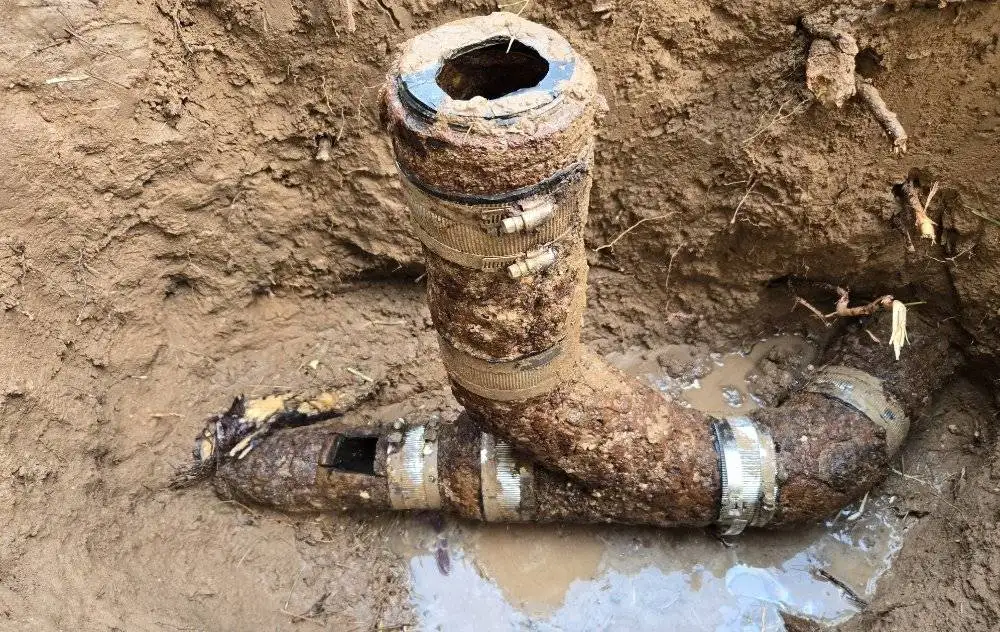
Why do older Phoenix and Chandler sewer pipes fail underground?
Underground sewer laterals in Maricopa County fail from three specific physical mechanisms, and the pipe material under your yard determines which failure shows up first.
Cast iron channeling in pre-1978 homes
Homes built across Central Phoenix, Glendale, and older parts of Chandler before the late 1970s commonly used cast iron for under-slab drains and yard laterals. Over 40 to 50 years, hydrogen sulfide sewer gas and constant wastewater flow eat a rough channel along the bottom of the pipe.
Once the bottom wall rusts away, toilet paper snags on jagged metal edges and wastewater leaks into the soil beneath the slab or yard. Descaling can smooth mild surface rust, but once the floor of the pipe is gone, only replacement fixes it.
Clay joint separation and desert tree roots
Vitrified clay sewer pipes were laid in short sections joined by mortar or rubber collars. Shifting desert soil opens hairline gaps at those joints, and moisture-seeking roots from ficus, mesquite, and olive trees grow straight inside.
Mechanical root blades cut those roots back for a few months, yet pruning stimulates thicker regrowth inside the cracked joint until the collar breaks completely.
Pipe bellies caused by soil settlement
A belly is a sagged section of pipe where soil settled underneath the trench, creating a low spot that holds standing water permanently. Even plastic ABS or PVC pipes can develop a belly if originally backfilled on loose dirt.
Because solids settle out whenever water slows down inside a belly, grease and paper accumulate in the exact same footage over and over until the grade is excavated and re-bedded.
If your plumber clears the same main line twice inside six months, ask for a recorded video camera inspection before paying for a third snake job.
Dealing with this exact issue in Chandler, Phoenix, or Glendale? Review our Sewer Line Replacement service or call (623) 440-0722 for a direct diagnostic visit.
Who is responsible for the sewer line between the house and the street?
Property owners often assume the city covers any pipe sitting past the front yard sidewalk, which leads to costly delays during a backup. In Chandler, Phoenix, and Glendale, the municipal water and wastewater department maintains the public sewer main running under the street or alley, while the homeowner owns the private lateral running from the home all the way to the city tap.
- Run a camera inspection from your yard cleanout to measure the exact distance to the blockage
- Confirm whether the obstruction sits inside your private lateral or inside the public city main
- If the city main itself is backed up, notify your municipal utilities dispatch before excavating
What happens step by step during a residential sewer line replacement?
Knowing the actual field sequence removes guesswork when a main line fails. A standard exterior yard sewer replacement runs one to three days depending on depth, length, and concrete obstacles.
1. Video inspection and electronic locating
The technician pushes a camera with a built-in 512 Hz transmitter through the cleanout and marks the exact pipe path and burial depth on the surface with paint or flags. This prevents digging blind trenches across landscaping or irrigation lines.
2. Excavation, removal, and Schedule 40 ABS or PVC installation
The crew digs down to the failed pipe, removes the broken cast iron or clay, compacts a stable bedding base at proper slope (typically 1/4 inch drop per foot for 3-inch and 4-inch lines), and installs new Schedule 40 ABS or PVC pipe with stainless-steel shielded transition couplings.
3. Two-way cleanout installation and final flow test
A new ground-level two-way cleanout is installed near the foundation so future inspections take minutes. Before backfilling, the crew runs water from interior fixtures and verifies clean grade and dry joints.
Primary Local Sources Referenced
Frequently Asked Questions
How much does a sewer camera inspection cost compared to guessing?
A video sewer camera inspection is a small fraction of excavation cost and typically takes 30 to 60 minutes. It shows exact depth, pipe material, and whether a targeted spot repair will work instead of full replacement.
Can I stay in my home during a sewer line replacement?
Yes. Water and drains are only shut down during the active pipe tie-in window, typically a few hours. Your technician coordinates shutoff times so household disruption stays minimal.
Is ABS or PVC better for Arizona sewer line replacements?
Both Schedule 40 ABS and Schedule 40 PVC meet Arizona plumbing code and resist corrosion and root entry when properly solvent-welded. Choice usually matches the existing building drain material to minimize transition joints.
How do I schedule a sewer camera inspection in Chandler or Phoenix?
Call First Call Sewer and Drain at (623) 440-0722. We inspect residential and commercial sewer lines across Chandler, Phoenix, Glendale, and Maricopa County.
24/7 Emergency & Same-Day Dispatch
Talk Directly With an Experienced Chandler & Phoenix Plumber
If you need a sewer camera inspection, drain clearing, water heater repair, or replacement anywhere in Maricopa County, call (623) 440-0722 24/7.